

Jisoo Park

portrait of woman

About

Projects

Resume

UX Research

The Mouse Software (almost) Nobody Opens

Have you ever customized your mouse settings? Most professionals haven't, even though the software to do it is already there. In partnership with Dell's Experience Design group, I set out to answer a simple question: where does that journey break down, and how can software close the gap?

Duration.

Scope.

Role.

Team.

3 months

UX Research (Lead)

Qualitative Interviews, Survey Design, Review Mining, Segmentation

Solo

Did you know? Your mouse has all sorts of settings.

Most mice today come with companion software that lets you remap buttons, create shortcuts, and even set up different profiles for different tasks. Yet among full-time professionals, only 15%* remap their mouse buttons, even though it only takes a few clicks.

* Based on a pre-screened sample of 150 wireless mouse users who chose their own mouse and use it for more than 20 hours per week.
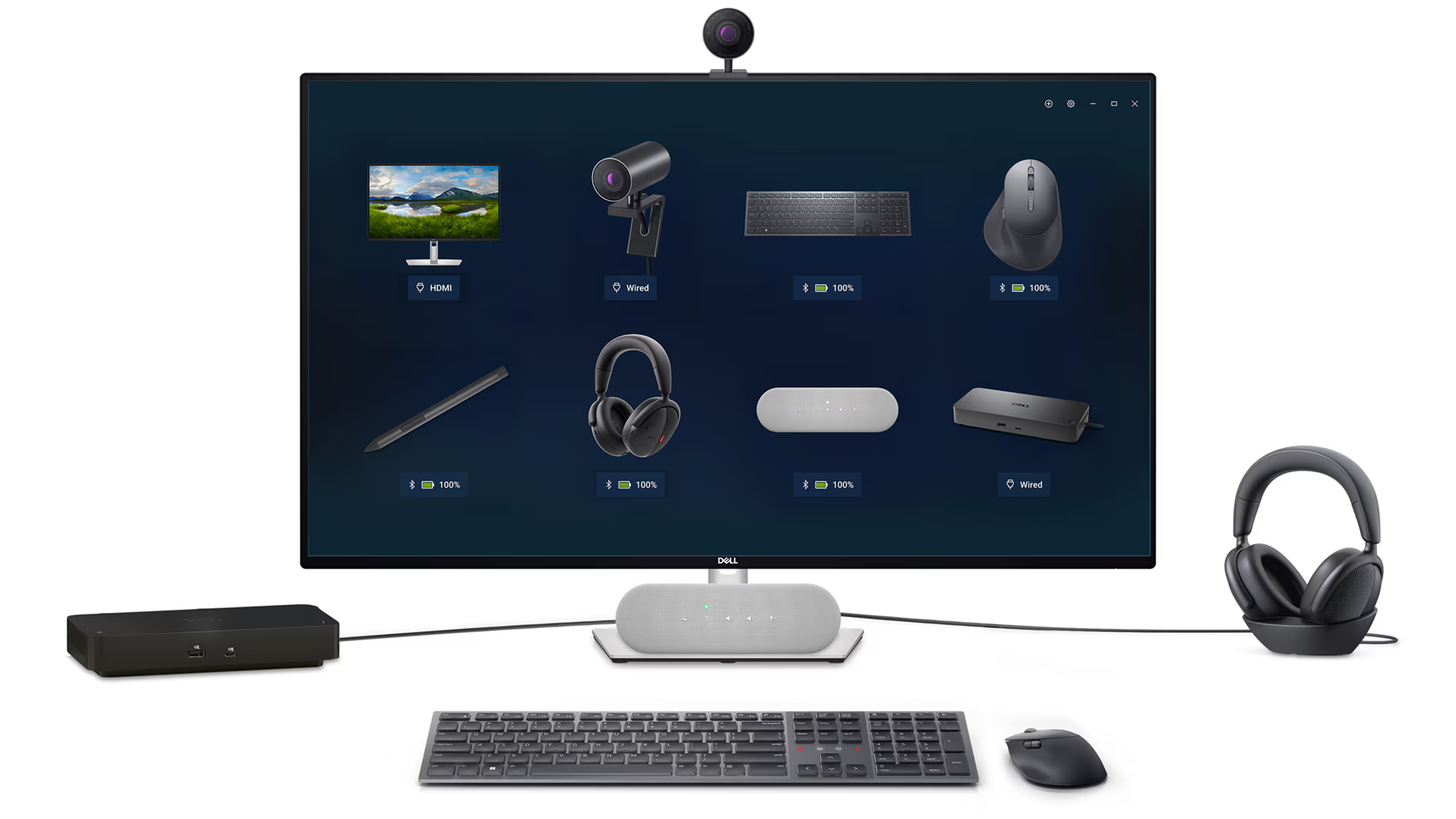
Dell Technologies offers a range of peripherals alongside a companion app, Dell Display and Peripheral Manager (DDPM), the product this research is designed to inform.

So what’s stopping users from using the software?

Research → Segmentation → Synthesis → Poster & Stakeholder Deck

This project followed a full mixed-methods process: 15 one-on-one interviews, a 152-response behavioral survey, and a read of 654+ customer reviews, to find the gap in user journey and the design opportunities that could improve it.

654 Reviews, One Pattern

15 interviews and a 152-response survey gave us two lenses on the same problem: what people say they want, and what they actually do.

Three patterns stood out:

  • A "customization trough": mid-journey users who've tried basic customization are less satisfied than people who never touched the settings at all, or people who went all the way to advanced use
  • Mid-career professionals (8–15 years experience) are the most invested in getting their setup right, and the least satisfied with the result
  • Screen snip was the single most requested one-button action, across nearly every interview
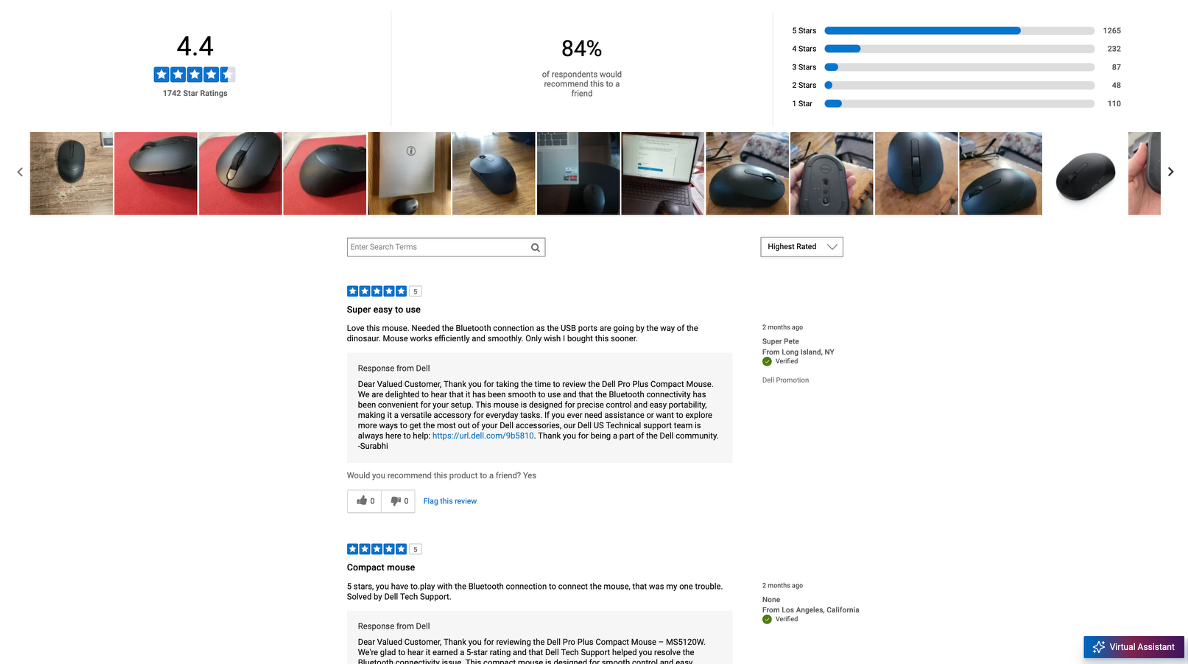
Customer reviews on Dell website are valuable data that reveal actual user sentiment across different product models.
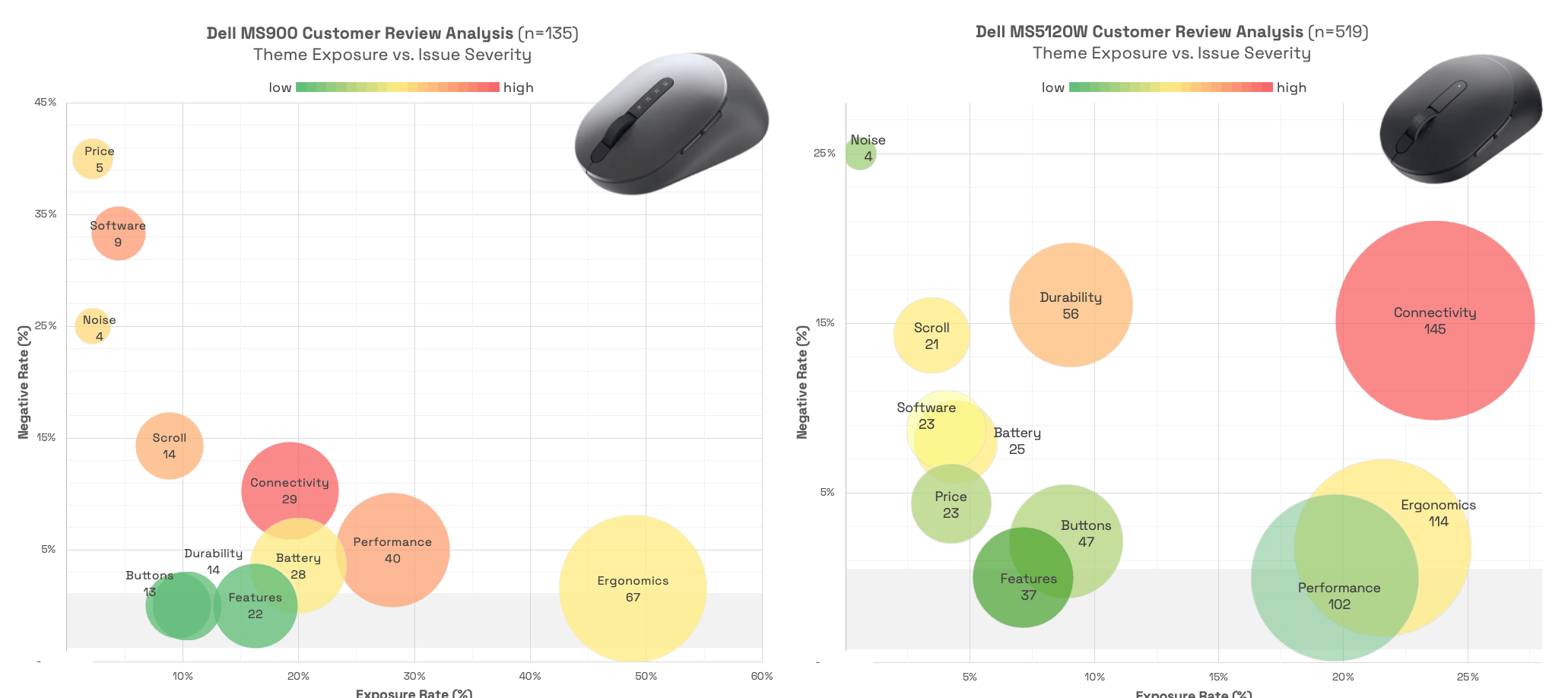
Customer Review Analysis on two best selling mouse

Setting the Research Lens

15 interviews and a 152-response survey gave us two lenses on the same problem: what people say they want, and what they actually do.

Three patterns stood out:

  • A "customization trough": mid-journey users who've tried basic customization are less satisfied than people who never touched the settings at all, or people who went all the way to advanced use
  • Mid-career professionals (8–15 years experience) are the most invested in getting their setup right, and the least satisfied with the result
  • Screen snip was the single most requested one-button action, across nearly every interview
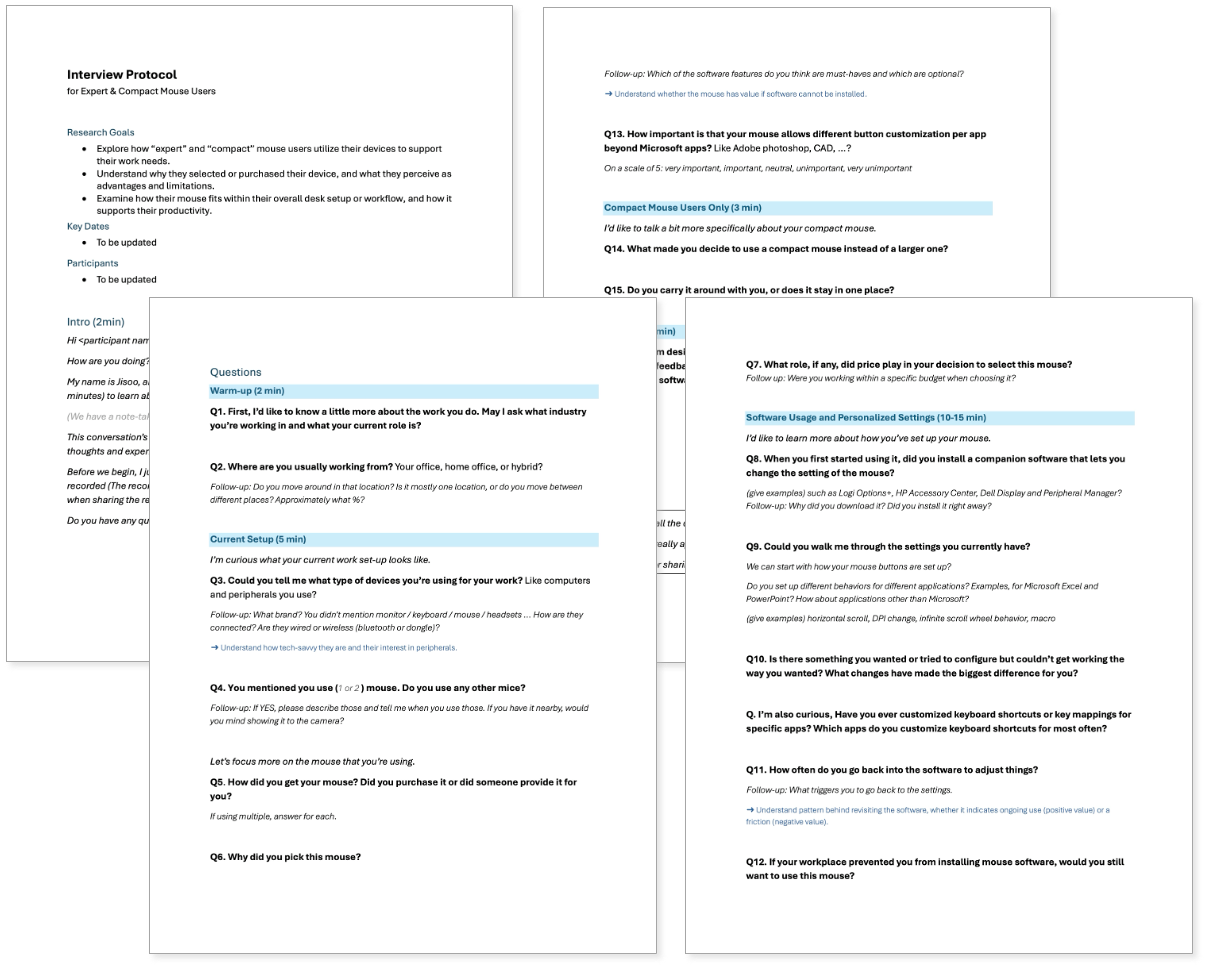
Interview protocols were tailored for two types of users: advanced customizers and on-the-go users.

A Screener That Needed Three Attempts
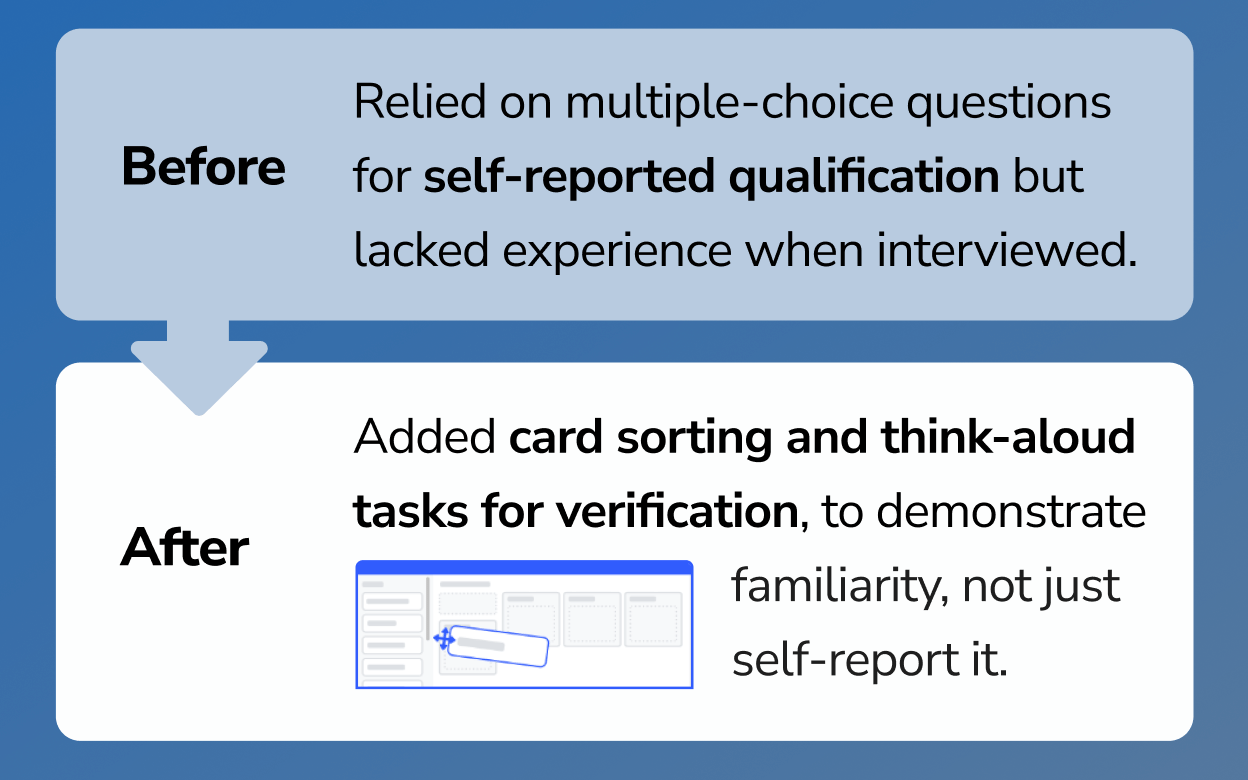
Recruiting the right participants from a general panel turned out to be harder than expected. Early screening relied on multiple-choice questions for self-reported qualification, but several participants turned out to lack the hands-on experience the study needed once interviews began.

The fix was to stop taking people's word for it. We added card sorting and think-aloud tasks so participants had to demonstrate familiarity, not just claim it. Of a pre-screened sample of 150 wireless mouse users, only 14.7% who personally selected their own device and used it over 20 hours a week actually qualified.

Making Sense of 167 Professional Voices

15 interviews and a 152-response survey gave us two lenses on the same problem: what people say they want, and what they actually do.

Three patterns stood out:

  • A "customization trough": mid-journey users who've tried basic customization are less satisfied than people who never touched the settings at all, or people who went all the way to advanced use
  • Mid-career professionals (8–15 years experience) are the most invested in getting their setup right, and the least satisfied with the result
  • Screen snip was the single most requested one-button action, across nearly every interview
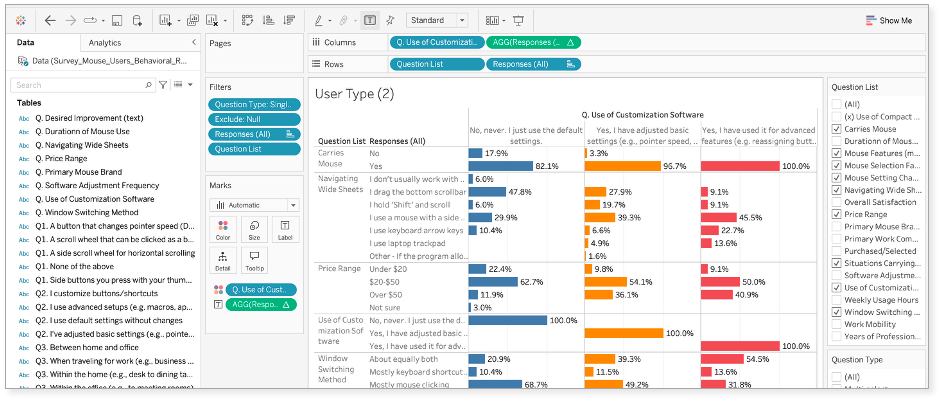
15 interviews and a 152-response survey gave us two lenses on the same problem: what people say they want, and what they actually do.

Three patterns stood out:

  • A "customization trough": mid-journey users who've tried basic customization are less satisfied than people who never touched the settings at all, or people who went all the way to advanced use
  • Mid-career professionals (8–15 years experience) are the most invested in getting their setup right, and the least satisfied with the result
  • Screen snip was the single most requested one-button action, across nearly every interview

Quantitative patterns across user groups
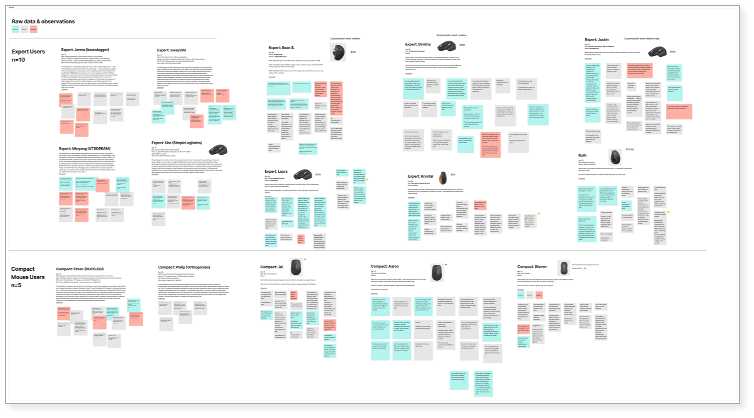
Interview themes identified through affinity mapping

Finding 1

55% own the buttons but only 15% ever remap them
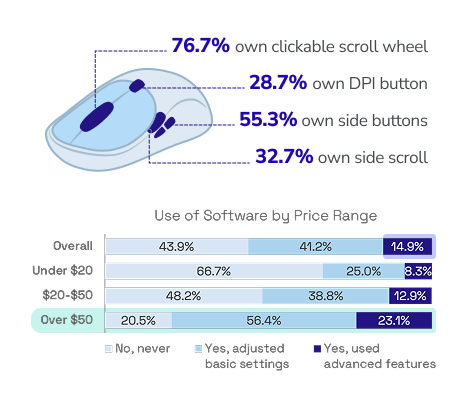
Most own more functionality than they use. 76% have a clickable scroll wheel and 55% have side buttons, yet only a small portion actively customize them. Even among users who paid over $50, most do not go beyond basic settings. This shows that higher-end hardware does not naturally lead to deeper software engagement.

Finding 2

Transitional users report lower satisfaction
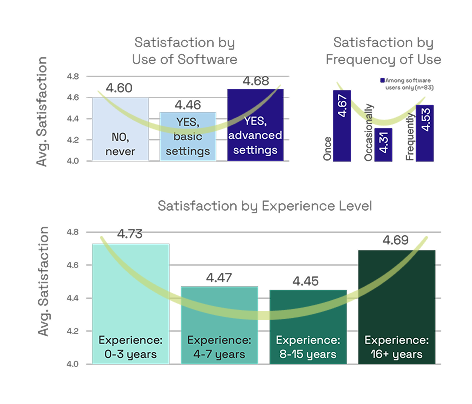
Although overall satisfaction is high, a consistent pattern emerges: intermediate users report lower satisfaction than both beginners and advanced users. Those who only adjust basic settings score lower than users who never customized at all or those who use advanced features. This suggests a clear drop-off point in the user journey.

Finding 3

8-15 year professionals are the active power users
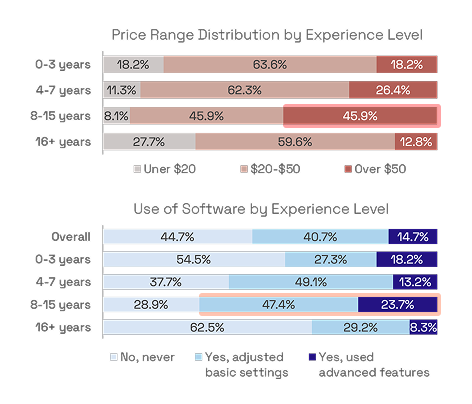
Mid-career professionals (8–15 years) stand out: nearly half have spent over $50 on a mouse and they customize it more actively than any other group. However, they also report the lowest satisfaction overall, suggesting their higher investment and engagement are not fully reflected in their experience.

So, What Would Close the Gap?

Find out the details in the full report.
p.s. Photographs

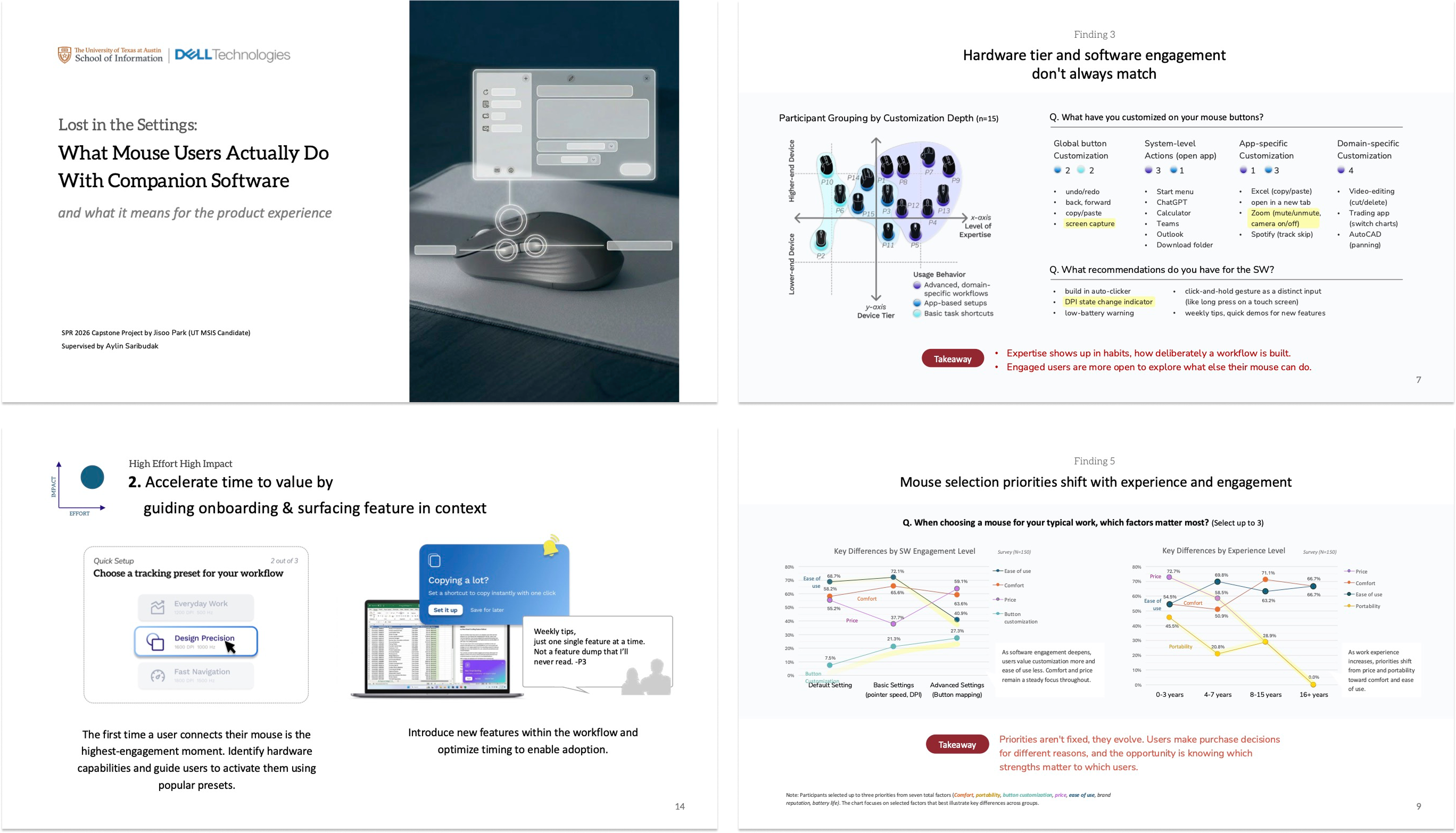
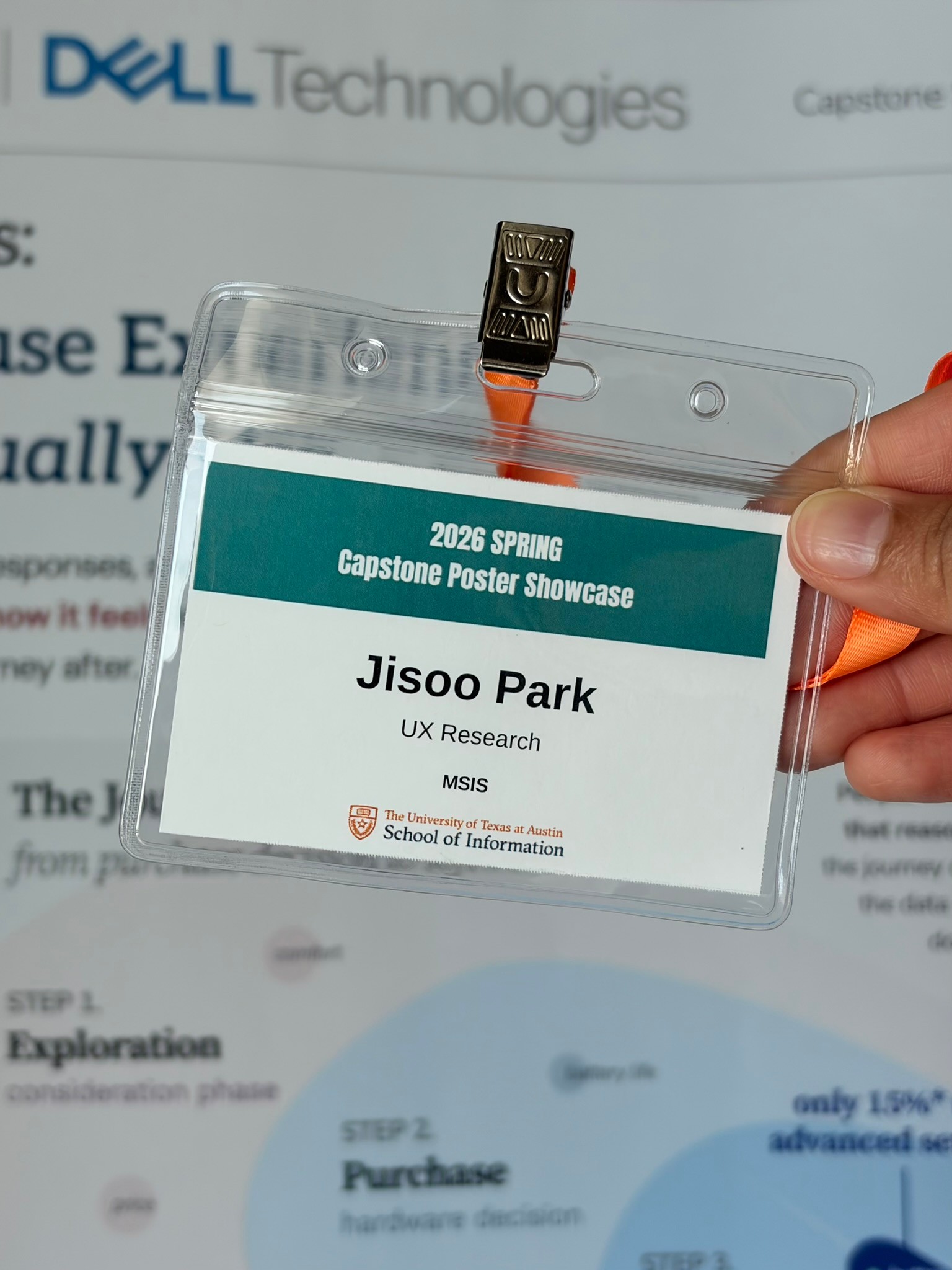
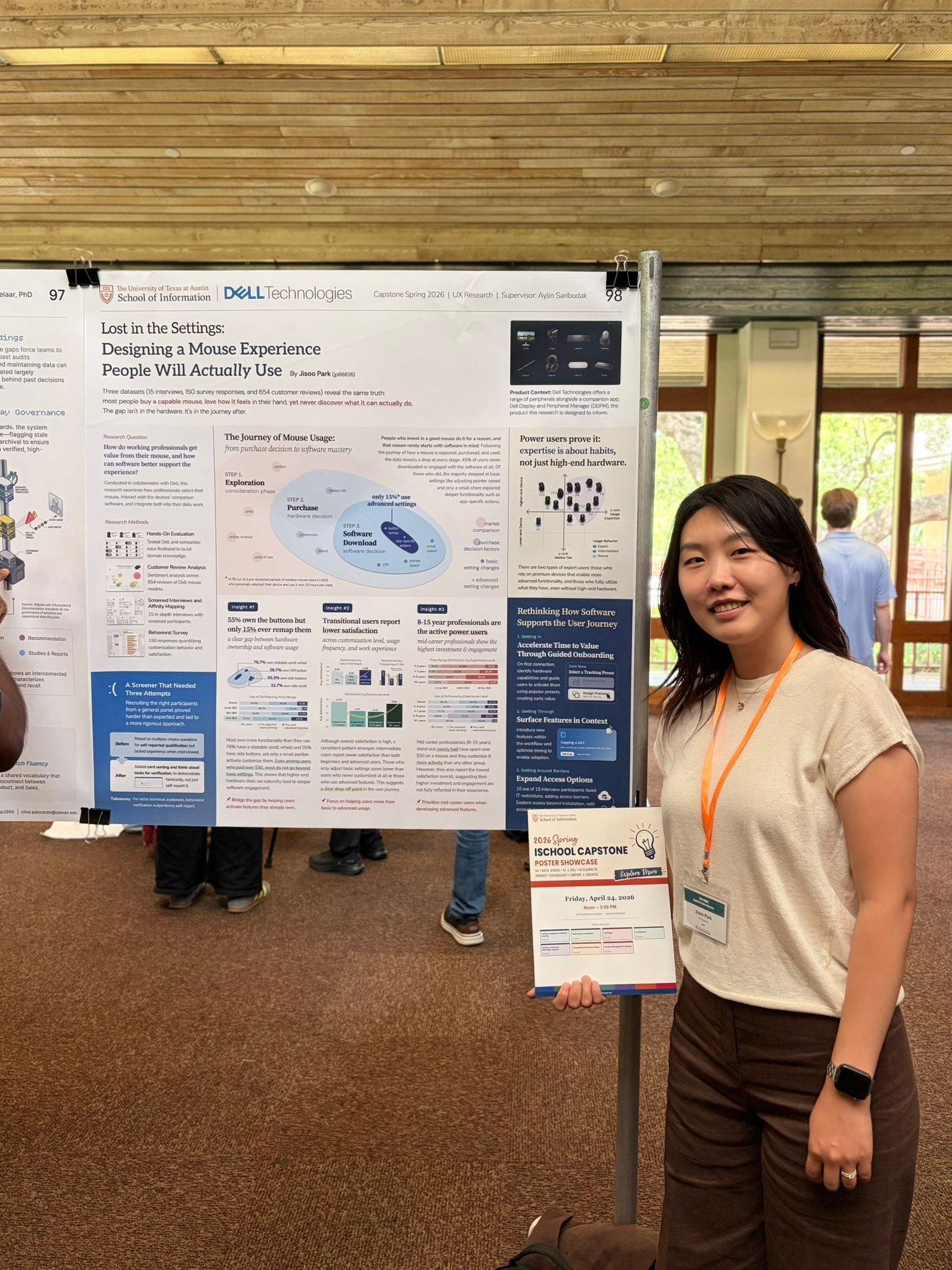
This project was presented at UT Austin MSIS 2026 Capstone Poster Showcase.
© Designed by Jisoo Park | 2026

portrait of woman

Jisoo Park

About

Projects

Resume

UX Research

The Mouse Software (almost) Nobody Opens

Have you ever customized your mouse settings? Most professionals haven't, even though the software to do it is already there. In partnership with Dell's Experience Design group, I set out to answer a simple question: where does that journey break down, and how can software close the gap?

Duration.

Scope.

Role.

Team.

3 months

UX Research (Lead)

Qualitative Interviews, Survey Design, Review Mining, Segmentation

Solo

Did you know? Your mouse has all sorts of settings.

Most mice today come with companion software that lets you remap buttons, create shortcuts, and even set up different profiles for different tasks. Yet among full-time professionals, only 15%* remap their mouse buttons, even though it only takes a few clicks.

* Based on a pre-screened sample of 150 wireless mouse users who chose their own mouse and use it for more than 20 hours per week.

Dell Technologies offers a range of peripherals alongside a companion app, Dell Display and Peripheral Manager (DDPM), the product this research is designed to inform.

So what’s stopping users from using the software?

Research → Segmentation → Synthesis → Poster & Stakeholder Deck

This project followed a full mixed-methods process: 15 one-on-one interviews, a 152-response behavioral survey, and a read of 654+ customer reviews, to find the gap in user journey and the design opportunities that could improve it.

654 Reviews, One Pattern

15 interviews and a 152-response survey gave us two lenses on the same problem: what people say they want, and what they actually do.

Three patterns stood out:

  • A "customization trough": mid-journey users who've tried basic customization are less satisfied than people who never touched the settings at all, or people who went all the way to advanced use
  • Mid-career professionals (8–15 years experience) are the most invested in getting their setup right, and the least satisfied with the result
  • Screen snip was the single most requested one-button action, across nearly every interview

Customer reviews on Dell website are valuable data that reveal actual user sentiment across different product models.

Customer Review Analysis on two best selling mouse

Setting the Research Lens

15 interviews and a 152-response survey gave us two lenses on the same problem: what people say they want, and what they actually do.

Three patterns stood out:

  • A "customization trough": mid-journey users who've tried basic customization are less satisfied than people who never touched the settings at all, or people who went all the way to advanced use
  • Mid-career professionals (8–15 years experience) are the most invested in getting their setup right, and the least satisfied with the result
  • Screen snip was the single most requested one-button action, across nearly every interview

Interview protocols were tailored for two types of users: advanced customizers and on-the-go users.

A Screener That Needed Three Attempts

Recruiting the right participants from a general panel turned out to be harder than expected. Early screening relied on multiple-choice questions for self-reported qualification, but several participants turned out to lack the hands-on experience the study needed once interviews began.

The fix was to stop taking people's word for it. We added card sorting and think-aloud tasks so participants had to demonstrate familiarity, not just claim it. Of a pre-screened sample of 150 wireless mouse users, only 14.7% who personally selected their own device and used it over 20 hours a week actually qualified.

Making Sense of 167 Professional Voices

15 interviews and a 152-response survey gave us two lenses on the same problem: what people say they want, and what they actually do.

Three patterns stood out:

  • A "customization trough": mid-journey users who've tried basic customization are less satisfied than people who never touched the settings at all, or people who went all the way to advanced use
  • Mid-career professionals (8–15 years experience) are the most invested in getting their setup right, and the least satisfied with the result
  • Screen snip was the single most requested one-button action, across nearly every interview

15 interviews and a 152-response survey gave us two lenses on the same problem: what people say they want, and what they actually do.

Three patterns stood out:

  • A "customization trough": mid-journey users who've tried basic customization are less satisfied than people who never touched the settings at all, or people who went all the way to advanced use
  • Mid-career professionals (8–15 years experience) are the most invested in getting their setup right, and the least satisfied with the result
  • Screen snip was the single most requested one-button action, across nearly every interview

Quantitative patterns across user groups

Interview themes identified through affinity mapping

Finding 1

55% own the buttons but only 15% ever remap them

Most own more functionality than they use. 76% have a clickable scroll wheel and 55% have side buttons, yet only a small portion actively customize them. Even among users who paid over $50, most do not go beyond basic settings. This shows that higher-end hardware does not naturally lead to deeper software engagement.

Finding 2

Transitional users report lower satisfaction

Although overall satisfaction is high, a consistent pattern emerges: intermediate users report lower satisfaction than both beginners and advanced users. Those who only adjust basic settings score lower than users who never customized at all or those who use advanced features. This suggests a clear drop-off point in the user journey.

Finding 3

8-15 year professionals are the active power users

Mid-career professionals (8–15 years) stand out: nearly half have spent over $50 on a mouse and they customize it more actively than any other group. However, they also report the lowest satisfaction overall, suggesting their higher investment and engagement are not fully reflected in their experience.

So, What Would Close the Gap?

Find out the details in the full report.

p.s. Photographs

This project was presented at UT Austin MSIS 2026 Capstone Poster Showcase.
© Designed by Jisoo Park | 2026

portrait of woman

Jisoo Park

About

Projects

Resume

UX Research

The Mouse Software (almost) Nobody Opens

Have you ever customized your mouse settings? Most professionals haven't, even though the software to do it is already there. In partnership with Dell's Experience Design group, I set out to answer a simple question: where does that journey break down, and how can software close the gap?

Duration.

Role. Scope.

Team.

3 months

UX Research (Lead)

Qualitative Interviews, Survey Design, Review Mining, Segmentation

Solo

Did you know? Your mouse has all sorts of settings.

Most mice today come with companion software that lets you remap buttons, create shortcuts, and even set up different profiles for different tasks. Yet among full-time professionals, only 15%* remap their mouse buttons, even though it only takes a few clicks.

* Based on a pre-screened sample of 150 wireless mouse users who chose their own mouse and use it for more than 20 hours per week.

Dell Technologies offers a range of peripherals alongside a companion app, Dell Display and Peripheral Manager (DDPM), the product this research is designed to inform.

So what’s stopping users from using the software?

Research → Segmentation → Synthesis → Poster & Stakeholder Deck

This project followed a full mixed-methods process: 15 one-on-one interviews, a 152-response behavioral survey, and a read of 654+ customer reviews, to find the gap in user journey and the design opportunities that could improve it.

654 Reviews, One Pattern

Customer reviews are where frustration shows up before becoming a support ticket. So I began with the sentiment analysis across 654 reviews of two of Dell's best-selling mice.

Customer reviews on Dell website are valuable data that reveal actual user sentiment across different product models.

Customer Review Analysis on two best selling mouse

(LEFT) The MS900 held up well: ergonomics dominated the conversation, and it stayed mostly positive, though performance and connectivity drew sharper complaints than their visibility would suggest. (RIGHT) The MS5120W told a different story. Users valued what it could do, but connectivity and durability issues surfaced at a severity that outpaced everything else.

Setting the Research Lens

We wanted people who actually had a choice. So we recruited professionals who selected their own mouse and used it extensively for work.

From there, we looked at responses through two simple lenses: software engagement and years of professional experience.

Interview protocols were tailored for two types of users: advanced customizers and on-the-go users.

A Screener That Needed Three Attempts

Recruiting the right participants from a general panel turned out to be harder than expected. Early screening relied on multiple-choice questions for self-reported qualification, but several participants turned out to lack the hands-on experience the study needed once interviews began.

The fix was to stop taking people's word for it. We added card sorting and think-aloud tasks so participants had to demonstrate familiarity, not just claim it. Of a pre-screened sample of 150 wireless mouse users, only 14.7% who personally selected their own device and used it over 20 hours a week actually qualified.

Making Sense of 167 Professional Voices

Each finding was validated through both quantitative patterns and qualitative stories.

Quantitative patterns across user groups

Interview themes identified through affinity mapping

Looking across both datasets, three clear patterns emerged.

Finding 1

55% own the buttons but only 15% ever remap them

Most own more functionality than they use. 76% have a clickable scroll wheel and 55% have side buttons, yet only a small portion actively customize them. Even among users who paid over $50, most do not go beyond basic settings. This shows that higher-end hardware does not naturally lead to deeper software engagement.

Finding 2

Transitional users report lower satisfaction

Although overall satisfaction is high, a consistent pattern emerges: intermediate users report lower satisfaction than both beginners and advanced users. Those who only adjust basic settings score lower than users who never customized at all or those who use advanced features. This suggests a clear drop-off point in the user journey.

Finding 3

8-15 year professionals are the active power users

Mid-career professionals (8–15 years) stand out: nearly half have spent over $50 on a mouse and they customize it more actively than any other group. However, they also report the lowest satisfaction overall, suggesting their higher investment and engagement are not fully reflected in their experience.

So, What Would Close the Gap?

Find out the details in the full report.

p.s. Photographs

This project was presented at UT Austin MSIS 2026 Capstone Poster Showcase.

Stay tuned for more!

© Designed by Jisoo Park | 2026